 EN
 VI
 ZH
Importing used equipment helps businesses significantly reduce machinery investment costs and expand production capacity. However, to clear customs, businesses must check the equipment's age, technical standards, documentation proving its origin, and relevant specialized management policies before signing a contract. The following article updates the regulations applicable as of November 2026, helping businesses proactively manage procedures and logistics costs.
1. Legal Requirements and Import Standards for Used Machinery
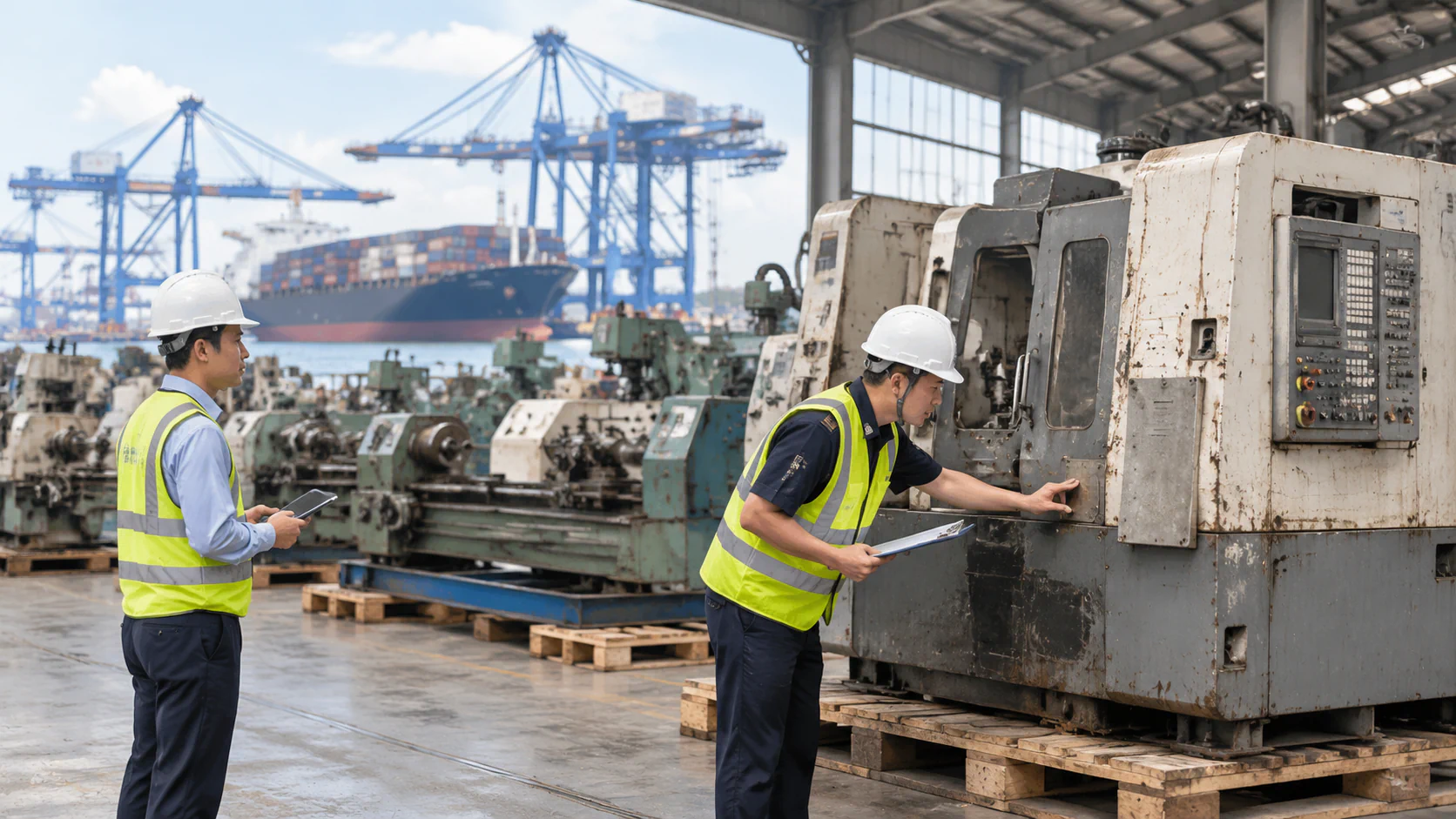
1.1. Regulations under Decision No. 18/2019/QD-TTg and Updated Legal Documents
The legal framework governing the import of used machinery, equipment, and technological production lines is based on Decision No. 18/2019/QD-TTg, as amended by Decision No. 02/2026/QD-TTg. Notably, Circular No. 56/2026/TT-BKHCN takes effect on September 5, 2026, providing more specific requirements regarding assessment criteria, documentation, and inspection activities.
These regulations apply to used machinery, equipment, and technological production lines classified under HS Chapters 84 and 85, imported for direct use in manufacturing activities in Vietnam, provided they do not fall under excluded cases or prohibited import categories. Equipment subject to separate specialized management requirements must be assessed under the corresponding regulations, rather than automatically following the entire standard procedure.
According to Article 6 of Circular No. 56/2026/TT-BKHCN, ordinary machinery and equipment must satisfy two basic groups of criteria:
- Equipment age: Must not exceed 10 years. Certain industries and specific types of machinery are subject to separate age limits under Appendix I of the Circular.
- Manufacturing standards: Must comply with applicable national technical regulations (QCVN) concerning safety, energy efficiency, and environmental protection. Where no relevant QCVN exists, Vietnamese national standards (TCVN) or national standards of a G7 country or South Korea may be applied as prescribed.
Equipment age is calculated by subtracting the year of manufacture from the year of importation, rather than based on the actual number of months in operation. The year of importation is the year the goods arrive at a Vietnamese border gate. Therefore, the year of major overhaul, the year equipment was first put into operation, or the year the supplier disposed of the equipment cannot replace the year of manufacture when determining its age.
Businesses should also be aware of cases in which imports are prohibited, including equipment that has been officially declared by the exporting country as obsolete, poor-quality, environmentally polluting, or failing to meet safety, energy efficiency, and environmental protection requirements.
1.2. Quality Inspection Criteria and Operational Condition
Inspection is not simply a matter of checking the year of manufacture. Depending on the equipment type and applicable standards, the inspection organization must assess the brand, model, serial number, operating condition, configuration, and compliance with relevant technical requirements.
For cases requiring inspection, businesses should request an assessment of important parameters such as capacity, efficiency, wear and tear, energy consumption, safety, and actual operating performance. These data help determine the equipment's condition and compare it against the corresponding legal criteria.
In particular, businesses must distinguish between equipment age inspection and assessments of quality and technological obsolescence. A machine with a relatively short service life does not necessarily meet safety standards. Conversely, a machine that has been used for many years is not automatically accepted simply because it is still operating properly.
Before inspection, businesses should prepare overall photographs, machine nameplates, manufacturer information, model numbers, serial numbers, years of manufacture, rated capacity, catalogues, and operating manuals. If the nameplate is missing or the information is inconsistent, additional supporting evidence should be requested from the supplier before arranging the inspection.
2. Documentation and Inspection Procedures in Vietnam
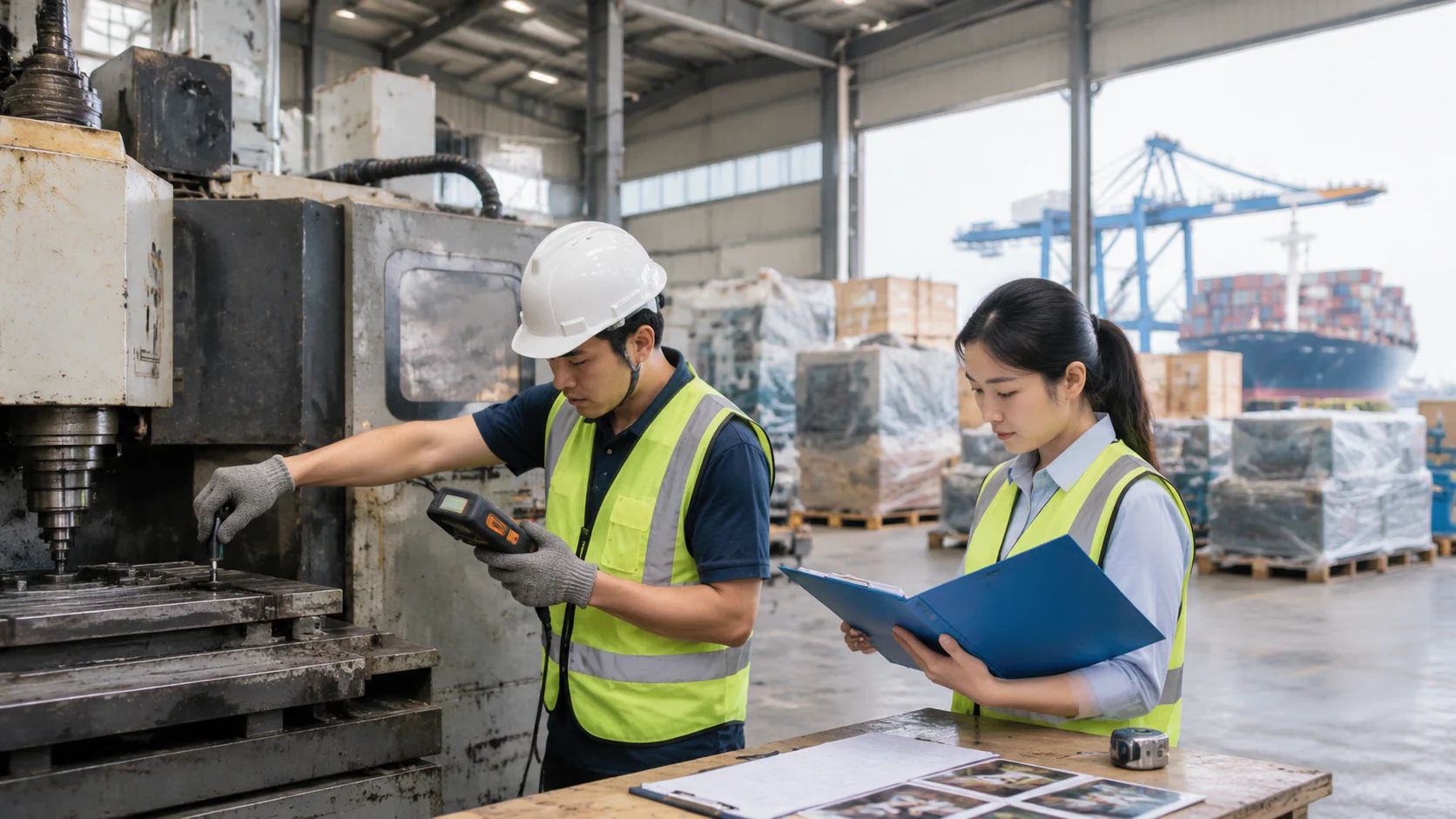
2.1. Documentation Proving Origin and Technical Standards
The documentation package should be prepared in two groups: commercial documents required for customs procedures and technical documents demonstrating compliance with import conditions. These two groups serve different purposes and should not be used interchangeably.
| Document Group | Required Documents |
|---|---|
| Commercial | Sales Contract, Commercial Invoice, Packing List. |
| Transportation | Bill of Lading or Air Waybill, delivery and handover documents. |
| Origin | Certificate of Origin (C/O), if available and eligible for preferential tariff treatment. |
| Technical | Catalogue, Technical Specifications, drawings, and operating manuals. |
| Machine Identification | Nameplate photographs, model, serial number, year of manufacture, and capacity. |
| Proof of Compliance | Manufacturer's confirmation letter or Inspection Certificate, as applicable. |
An important point is that a C/O proves the origin of goods; it does not certify the year of manufacture or manufacturing standards. For machinery manufactured in a G7 country or South Korea, businesses may use a manufacturer's confirmation letter stating the year of manufacture and compliance with Article 6 requirements, subject to consular legalization and Vietnamese translation as prescribed.
For machinery manufactured in other countries, or cases where a manufacturer's confirmation letter is not available under the applicable regulations, businesses must prepare an Inspection Certificate issued by a designated inspection organization. Determining the appropriate method of proving compliance from the outset helps minimize additional costs at the port.
2.2. Inspection Registration and Implementation Procedures
The actual process should be implemented in five steps to ensure consistency between documentation and the imported goods:
- Step 1 – Review Import Policies: Determine the HS code, year of manufacture, equipment age, origin, technical standards, and specialized management requirements.
- Step 2 – Select an Inspection Organization: Verify that the organization has an official designation decision and an appropriate scope of operation for the type of machinery requiring inspection.
- Step 3 – Conduct the Physical Inspection: Arrange an inspection location and verify the nameplate, serial number, configuration, operating condition, and technical specifications.
- Step 4 – Obtain the Inspection Certificate: Check the identification details, inspection methods, applicable standards, and conclusion confirming compliance with import requirements.
- Step 5 – Complete the Procedures: Submit the required documents, coordinate with customs authorities, and address any additional requirements if they arise.
Under current regulations, if the manufacturer's confirmation letter is unavailable and an Inspection Certificate has not yet been provided, businesses may register for inspection services with a designated organization to bring the goods into customs-supervised storage in accordance with customs regulations. The certificate must be submitted within no more than 30 days from the date the goods are placed in storage.
If the inspection results are unsatisfactory, businesses may find that the shipment fails to meet customs clearance requirements and may be subject to penalties under applicable regulations. Therefore, businesses should not place orders or make full payments before verifying their ability to prove the year of manufacture and demonstrate compliance with technical standards.
3. Customs Procedures, HS Codes, and Import Duties

3.1. Determining HS Codes and Tax Obligations
The HS code is an important basis for determining tax rates, import policies, and specialized inspection requirements. Classification must be based on the equipment's primary function, operating principles, structure, capacity, materials, and degree of completion, while also referring to the HS Explanatory Notes and the current Import and Export Tariff Schedule.
For individual machines, equipment assemblies, and integrated production lines, businesses must clearly determine the import method and the completeness of the goods. Dismantled machinery, components, or separately imported parts may need to be classified under different HS codes from those applicable to complete machines.
The taxes and charges that should be included in the budget are:
- Import Duty: Determined based on the HS code, origin, and applicable tariff schedule. Special preferential import duty rates may apply if the goods satisfy the rules of origin and documentary requirements of the relevant trade agreement.
- Value-Added Tax (VAT): Applied according to the tax rate and current policies applicable to the goods at the time of importation.
- Related Costs: Inspection fees, documentation fees, port charges, warehousing fees, container storage charges, and domestic transportation costs.
Customs value must be determined in accordance with the Incoterms 2026 delivery terms and customs valuation regulations. For FOB shipments, international freight and insurance costs must be considered for inclusion as prescribed. For CFR or CIF shipments, businesses should verify which charges are already included to avoid omissions or duplicate calculations. A low purchase price for used machinery does not necessarily mean lower tax obligations.
3.2. Customs Declaration and Clearance Procedures
- Step 1: Prepare the contract, Invoice, Packing List, bill of lading, technical documentation, and relevant specialized regulatory documents.
- Step 2: Submit an electronic customs declaration through the VNACCS system, ensuring accurate information regarding the goods description, model, serial number, year of manufacture, origin, quantity, customs value, and HS code.
- Step 3: Receive the green, yellow, or red channel classification and undergo document checks or physical cargo inspections as required.
- Step 4: Pay applicable taxes, complete the Inspection Certificate requirements, and fulfill specialized inspection requirements where applicable.
- Step 5: Complete customs clearance, obtain the Delivery Order (D/O), settle related charges, and arrange transportation of the machinery to the factory.
Common errors that may prolong shipment processing include declaring an incorrect year of manufacture, using an incorrect HS code, missing inspection documents, declaring customs values without sufficient supporting evidence, or providing machine nameplate information that differs from the commercial documents. Businesses should cross-check all documents before submitting customs declarations and closely monitor requests from customs authorities.
4. Comprehensive Used Machinery Import Solutions with G-LOGS JSC
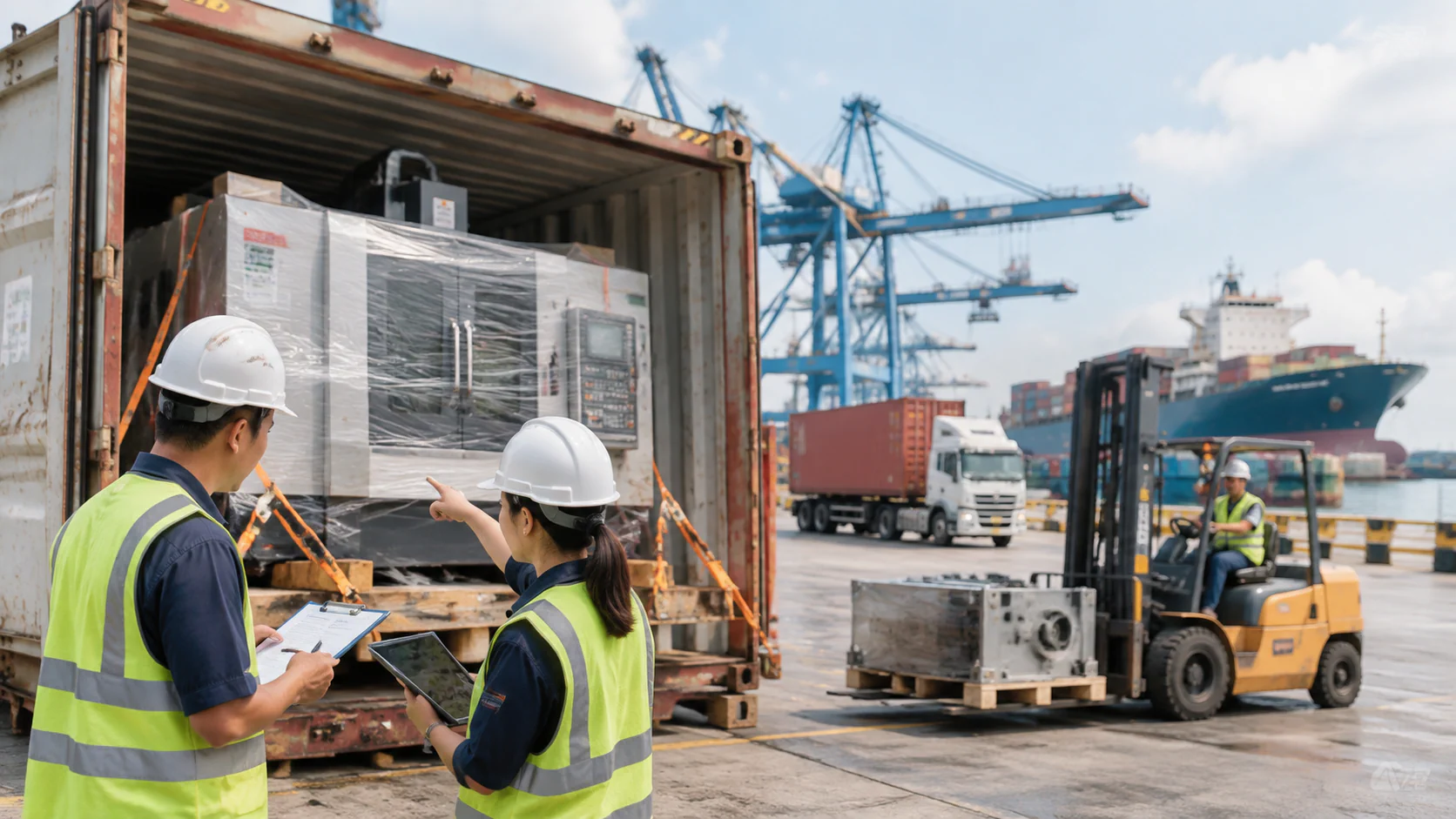
To minimize risks, businesses should develop their logistics plans from the supplier selection stage. G-LOGS JSC supports businesses by reviewing import policies, checking technical documentation, advising on preliminary HS code classification, evaluating inspection options, and developing transportation plans tailored to each type of equipment.
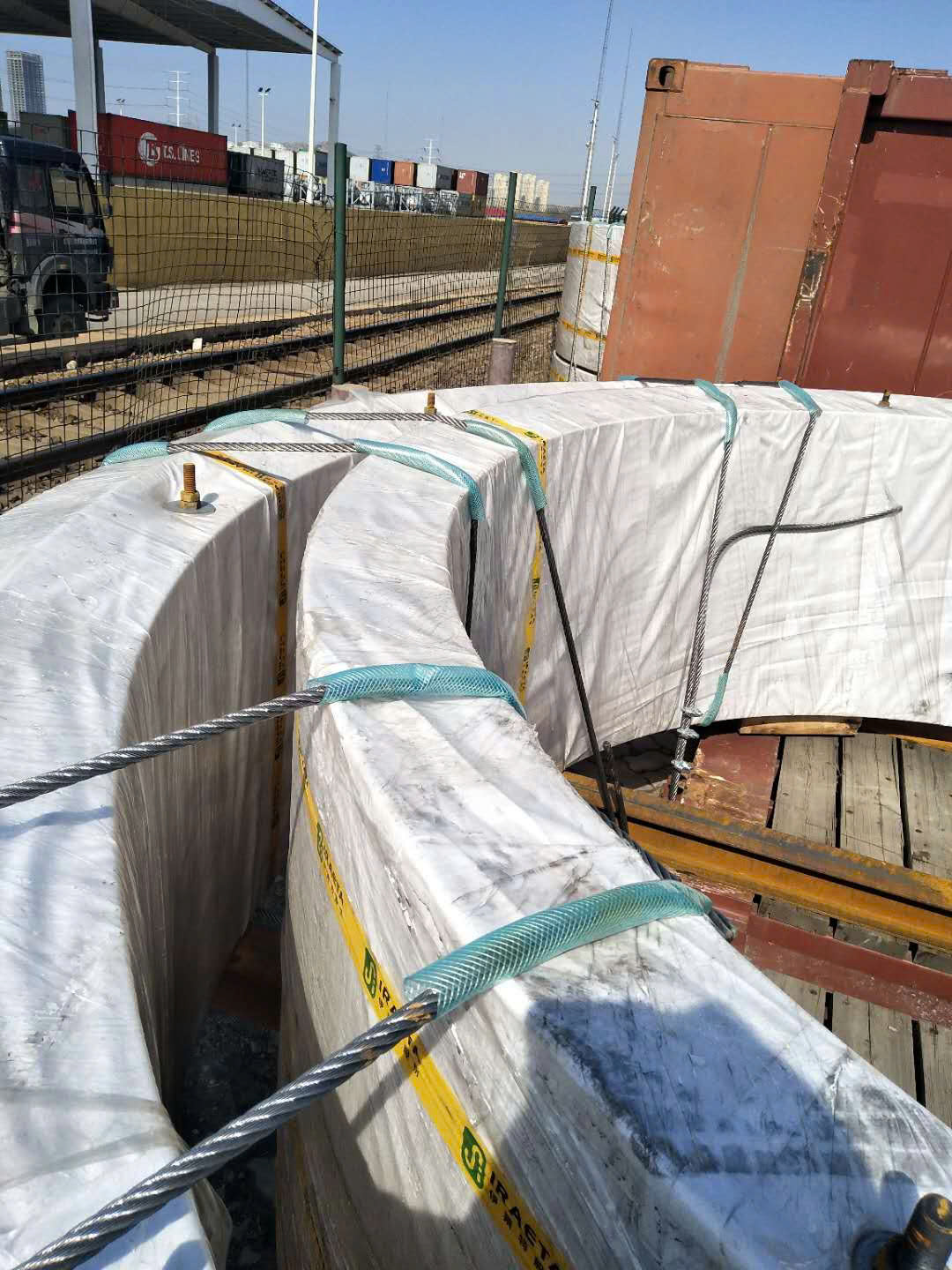
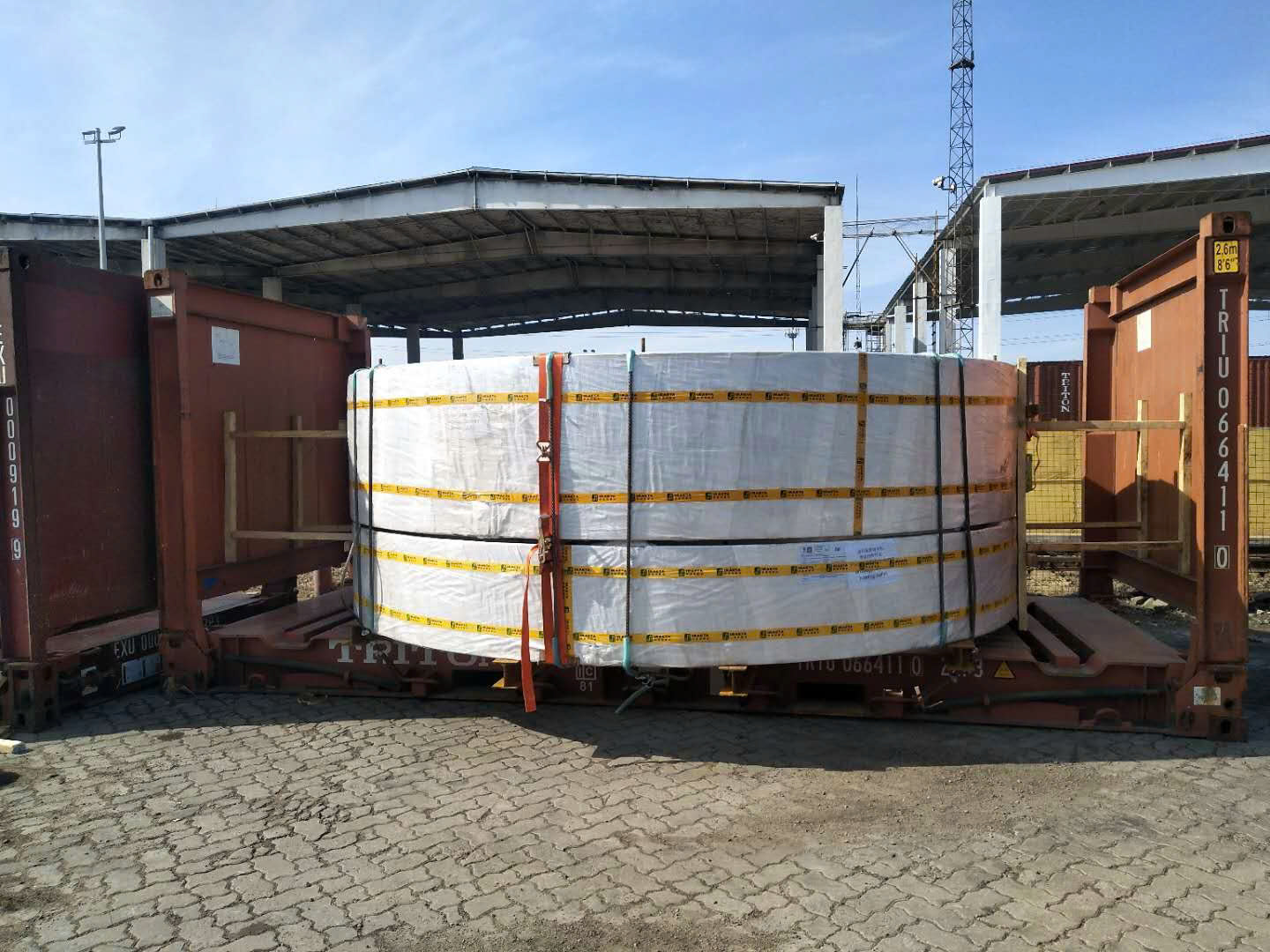
Regarding transportation methods, cargo with suitable dimensions and weight can be shipped in FCL containers, while smaller shipments or low-volume consignments may be suitable for LCL services. For oversized, overweight, or non-containerizable machinery, businesses may consider Open Top, Flat Rack, or specialized transportation solutions. Air freight may be considered for urgent deliveries after comparing costs and cargo characteristics.
G-LOGS integrates international ocean freight, air freight, customs declaration services, and domestic container transportation to manage the entire import process. Transportation planning must take into account the ETA, free storage period, DEM/DET charges, inspection time, cargo collection schedules, and the factory's capacity to receive the equipment.
For machinery imported from China, Japan, South Korea, or Europe, businesses should submit machine nameplate photographs, catalogues, model numbers, serial numbers, years of manufacture, dimensions, weight, and delivery addresses in advance to receive an assessment of suitable solutions. In particular, equipment age must be checked based on the year the goods arrive in Vietnam, rather than relying solely on the contract signing date or shipping date.
Businesses can refer to regulations published by the Ministry of Science and Technology and procedural information provided by the Customs Department to stay updated on import policies. Checking the legal documents currently in force, together with reviewing the actual requirements for each product code, provides a foundation for minimizing the risk of goods arriving at the port without meeting customs clearance conditions.
Importing used machinery requires simultaneous assessment across three aspects: legal requirements, operational capability, and the total cost of delivering the equipment to the factory. G-LOGS JSC is ready to advise on FCL/LCL transportation, air freight, inspection, and customs declaration solutions to optimize time and costs while minimizing risks for businesses. Contact us before placing your order so we can review your documentation and develop a suitable logistics plan.
G-LOGISTICS TRADING AND SERVICES JOINT STOCK COMPANY (G-LOGS JSC)
Address: 4th Floor, Coalimex Building, 29–31 Dinh Bo Linh Street, Binh Thanh Ward, Ho Chi Minh City, Vietnam.
Phone: (84) 28 3511 5354/5455
Email: info@g-logs.com
Website: www.g-logs.com