 EN
 VI
 ZH
Choosing a container involves more than just its external dimensions. You must also consider usable capacity, cargo payload, door dimensions, and transportation limits on each route. Understanding the specifications of 20-foot, 40-foot, and 40HC containers helps import-export businesses optimize cargo loading, minimize unexpected costs, and select the most suitable shipping solution.
1. 20ft and 40ft Container Dimensions: Technical Specifications, Payload Capacity, and Actual Volume Table
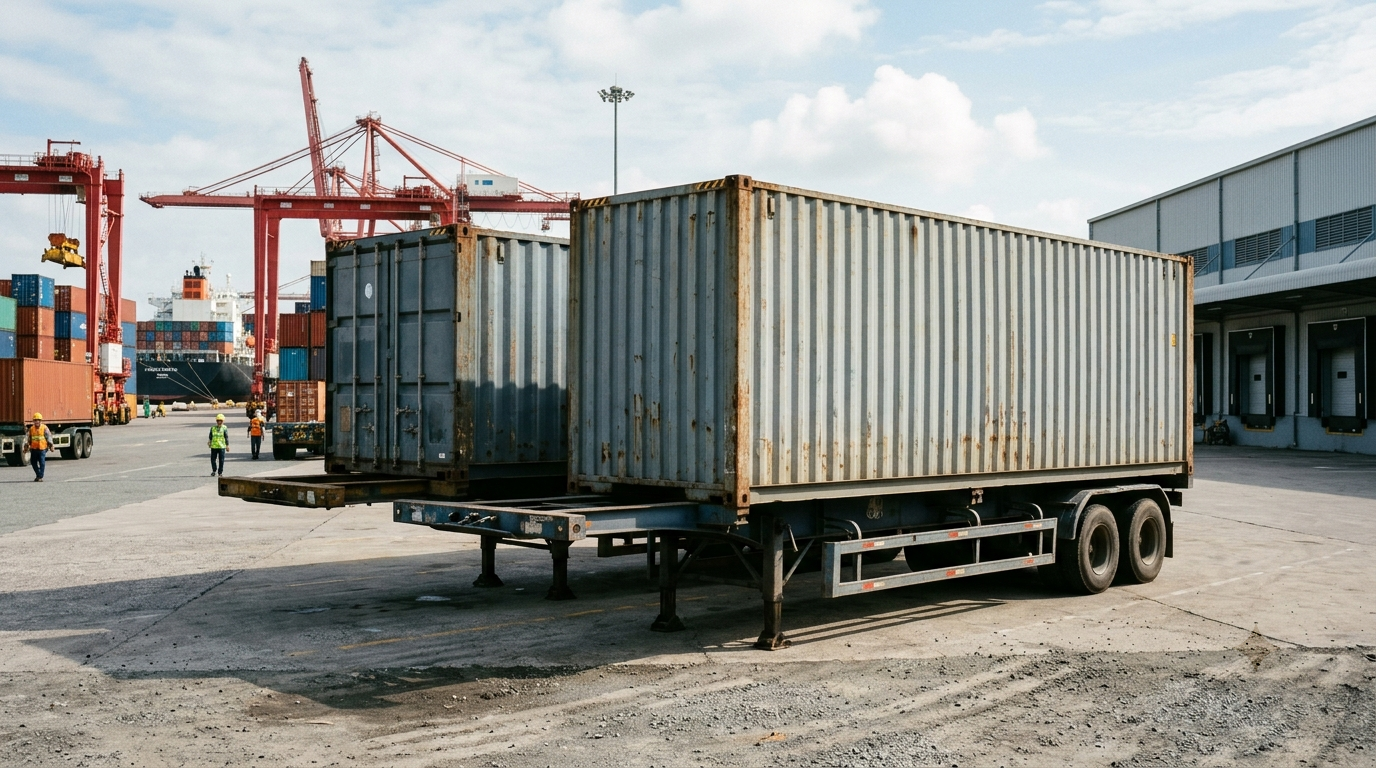
Dry containers are the most common type used in international sea freight. They are typically used to transport cartons, palletized goods, raw materials, and general machinery. The three main options are 20GP, 40GP, and 40HC. HC stands for High Cube, referring to containers that are taller than standard models to provide additional capacity for bulky cargo.
1.1. Dimensions of 20ft, 40ft, and 40HC Containers According to International Sea Freight Standards
The table below summarizes typical reference specifications available on the market. Dimensions are listed in the order of length × width × height. Maximum cargo weight is referred to as Payload, the empty container weight is Tare Weight, and Gross Weight is the combined weight of the container and its cargo.
| Specifications | 20GP | 40GP | 40HC |
|---|---|---|---|
| External Dimensions (m) | 6.058 × 2.438 × 2.591 | 12.192 × 2.438 × 2.591 | 12.192 × 2.438 × 2.896 |
| Internal Dimensions (m) | 5,898 × 2,352 × 2,392 | 12,032 × 2,352 × 2,392 | 12,032 × 2,352 × 2,698 |
| Door width × height (m) | 2,340 × 2,280 | 2,340 × 2,280 | 2,340 × 2,585 |
| Nominal capacity (CBM) | Approximately 33.2 | Approximately 67.6 | Approximately 76.3 |
| Tare weight (kg) | Approximately 2,200 | Approximately 3,600 | Approximately 3,800 |
| Reference payload (kg) | Approximately 28,280 | Approximately 28,900 | Approximately 28,700 |
| Maximum gross weight (kg) | 30.480 | 32.500 | 32.500 |
The figures above are for reference only and do not replace the specifications displayed on the container. Depending on the manufacturer, container age, and owner, tare weight, Payload, Gross Weight, or internal dimensions may vary. Before loading cargo, businesses should check the CSC specification plate on the assigned container and confirm the applicable limits with the shipping line.
20GP containers are suitable for many shipments with high weight but moderate volume. The 40GP provides nearly twice the length and capacity, while the 40HC offers approximately 30 cm of additional external height compared with a standard container, making it more suitable for lightweight, bulky cargo or tall packages.
1.2. How to Calculate CBM and Determine the Suitable Cargo Quantity for 20ft or 40ft Containers
CBM is the unit used to measure cargo volume in cubic meters and is calculated using the following formula: CBM = Length × Width × Height (m). For packages measured in centimeters, multiply the length by the width and height, then divide by 1,000,000 to convert the result into cubic meters. The total shipment volume is the sum of the CBM of all packages.
For example, a carton measuring 60 × 40 × 35 cm equals 0.084 CBM. If a shipment contains 300 cartons, its total volume is 25.2 CBM. This may fit within a 20GP container in terms of volume, but the loading arrangement, stacking capacity, total weight, and space required for securing materials must also be considered.
For palletized cargo, you must account for the final packaged height and any pallet overhang. For example, a pallet measuring 1.2 × 1 × 1.4 m occupies 1.68 CBM; 10 pallets equal 16.8 CBM. However, the actual number of pallets that can be loaded also depends on floor dimensions, pallet orientation, door width, and safe stacking capacity.
For machinery, do not select a container based on CBM alone. Determine the weight of each package, center of gravity, lifting points, concentrated floor loads, and securing arrangements. Heavy cargo may reach the payload limit before using the full capacity, while lightweight, bulky cargo generally requires priority to be given to available space and door height.
To make an accurate selection, compare the actual volume with the nominal capacity, then allow for operational clearance based on the loading plan. Do not assume that 100% of the stated volume can be used, as package shapes, securing materials, ventilation requirements, and handling arrangements all affect usable capacity.
2. Comparing 20ft and 40ft Containers in Terms of International Ocean Freight Rates
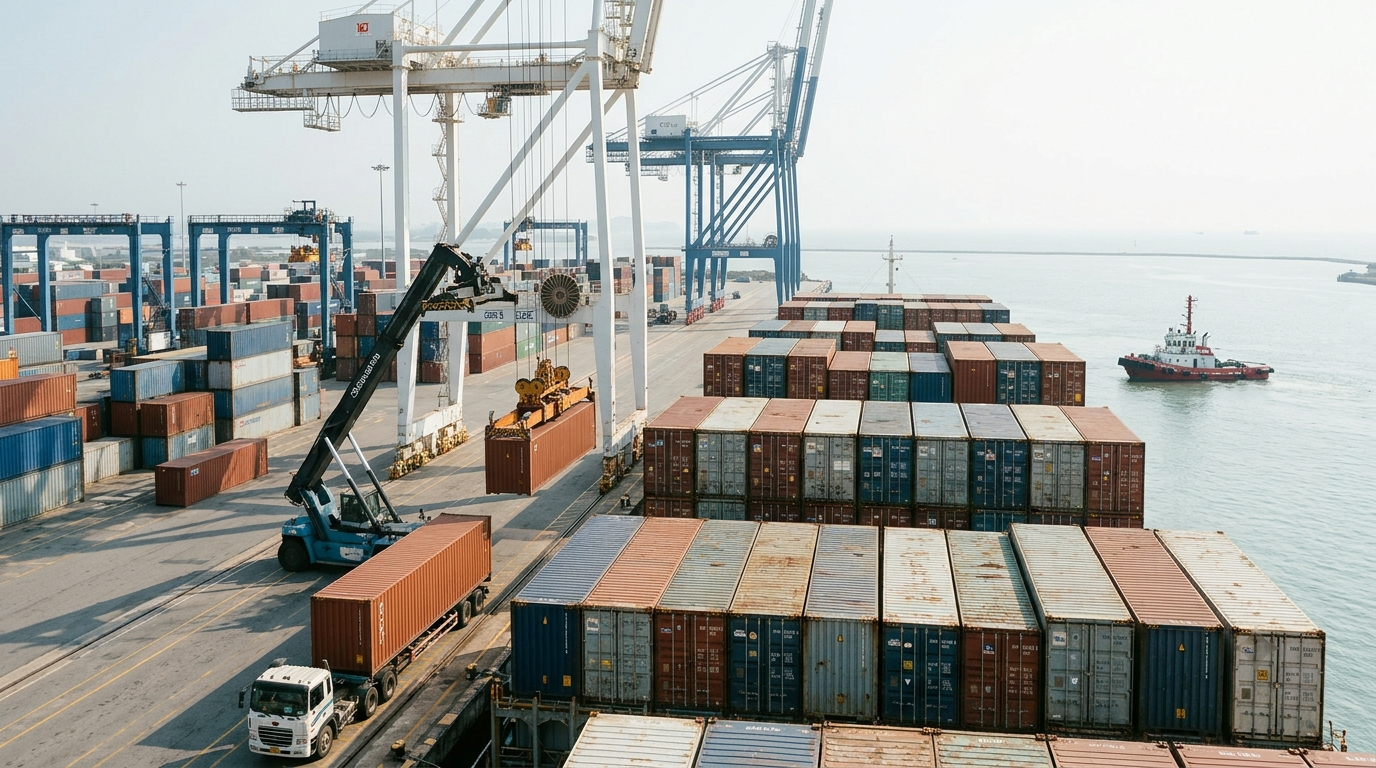
2.1. FCL Container Freight Structure and Charges Affecting Total Costs
FCL freight is quoted per container and container type, such as 20GP, 40GP, or 40HC. The price of a 40-foot container is not necessarily twice that of a 20-foot container. The difference depends on the shipping route, supply and demand for empty equipment, shipping line, departure schedule, peak season, and contract terms.
When receiving a quotation, businesses should clearly separate three cost categories: Origin Charges, Ocean Freight, and Destination Charges. A low ocean freight rate does not necessarily mean a lower total cost if port charges, handling fees, or related surcharges are higher than those of another option.
| Cost item | Details to check |
|---|---|
| Ocean freight | Container type, shipping route, sailing schedule, validity period, and applicable surcharges. |
| Origin charges | THC, documentation, seal, declarations, and any port handling fees. |
| Destination charges | THC, delivery order, port handling, and other charges according to the actual quotation. |
| Domestic Transportation | Container trucking fees, distance, waiting charges, loading and unloading fees, and delivery requirements. |
| Additional Charges | DEM, DET, port storage, warehouse storage, and surcharges based on actual conditions. |
DEM generally relates to the time a container remains at the port or terminal, while DET relates to the time a container is used outside the port beyond the applicable free-time allowance. Businesses should separately confirm the number of free days, charging method, charge commencement date, and payment responsibilities rather than checking only the total freight cost.
A useful quotation should clearly specify the port of loading, port of discharge, container type, estimated sailing schedule, transit time, validity period, and included or excluded charges. Comparing the same scope of services helps avoid evaluating quotations with different cost components.
2.2. How to Select the Optimal Container Type Based on Volume, Weight, and Incoterms
The decision between FCL and LCL should be based on total logistics costs, not just ocean freight rates. For smaller shipments, LCL may be more economical because container space is shared. As shipment volumes increase, FCL may become more suitable by reducing consolidation and deconsolidation handling, minimizing cargo contact, and providing greater control over loading schedules.
| Option | When to consider it | Key factors to evaluate |
|---|---|---|
| LCL | Small shipments that are not yet cost-effective for a full container. | Minimum charges, CFS warehouse fees, consolidation time, and cargo deconsolidation. |
| 20GP | Heavy cargo or shipments with moderate volume. | Payload, weight distribution, and cost per shipment. |
| 40GP | Large-volume cargo with dimensions suitable for standard containers. | Capacity utilization and total freight costs. |
| 40HC | Lightweight, bulky cargo or cargo requiring additional height. | Door height, package height, and actual payload. |
To compare options, prepare a total cost estimate for each alternative, including transportation, port charges, customs declarations, domestic delivery, and foreseeable additional expenses. You can calculate costs per CBM, per ton, or per product unit to determine the option that best suits the shipment characteristics and profit margin.
Incoterms 2026 also affect the allocation of responsibilities and costs between sellers and buyers. EXW places minimum obligations on the seller; FCA specifies delivery to the carrier at the agreed location; FOB applies to sea or inland waterway transport, with risk transferring when the goods are loaded onto the vessel. CFR and CIF require the seller to pay freight to the destination port; CIF also requires insurance to be obtained under the applicable rules, although risk still transfers at the port of loading.
For containerized cargo handed over at a terminal before being loaded onto a vessel, businesses should consider FCA rather than automatically using FOB. The key is to specify the exact delivery location, the party responsible for booking, the party paying each charge, and the point at which risk transfers to avoid gaps in contractual responsibilities.
3. International Container Shipping Process: From Quotation to Delivery
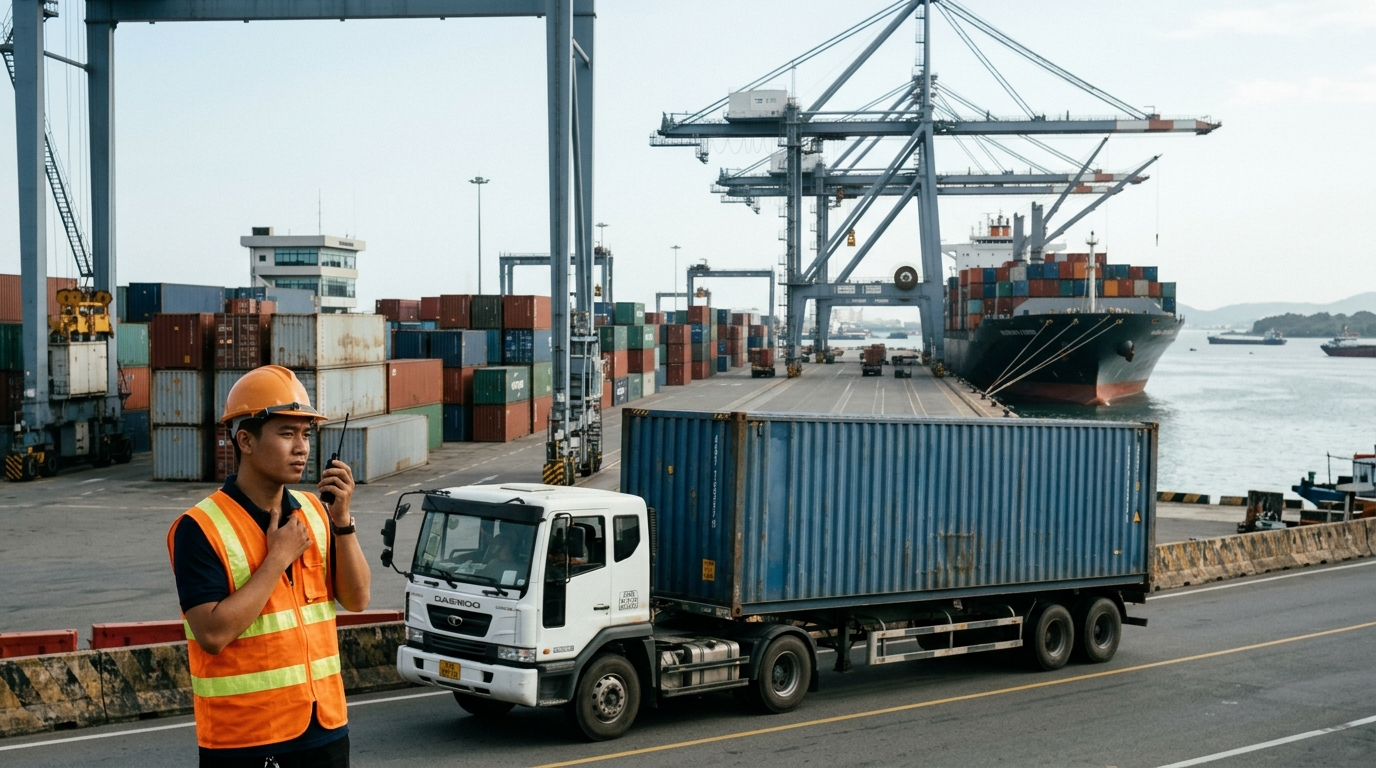
3.1. Booking, Cargo Loading, Customs Declaration, and Bill of Lading Issuance Process
The shipping process should follow a standardized sequence of steps to control sailing schedules and documentation:
- Step 1 – Collect Shipment Information: Determine the cargo description, estimated HS code, number of packages, dimensions, CBM, weight, port of loading, port of discharge, Incoterms, and delivery deadline.
- Step 2 – Select a Shipping Option and Make a Booking: Compare container specifications, obtain quotations, confirm the sailing schedule, DEM/DET free time, and transportation conditions, then book space with the shipping line.
- Step 3 – Prepare the documentation: Review the Commercial Invoice, Packing List, sales contract, and any specialized permits or documents required for regulated goods. Complete the customs declaration in accordance with current regulations.
- Step 4 – Load Cargo and Deliver the Container to the Terminal: Arrange the collection of an empty container, inspect its condition, load the cargo according to the loading plan, secure the goods, apply the seal, and deliver the container to the terminal before the cut-off time.
- Step 5 – Confirm the Bill of Lading: Check the Draft B/L and verify the shipper, consignee, cargo description, container number, seal number, and port information before the official bill of lading is issued.
Cut-off deadlines may vary depending on the vessel and port requirements, including deadlines for terminal delivery, shipping data declarations, and document submission. Therefore, obtain the specific schedule from the freight forwarder instead of relying solely on the vessel departure date when planning cargo loading.
When preparing documentation, businesses can refer to the guidelines of General Department of Vietnam Customs and the national trade portal to check procedures, product policies, and relevant documentation requirements. Early verification helps prevent situations where cargo has already been loaded into a container but is not yet eligible for customs clearance.
3.2. Managing Payload, Customs Clearance, and Additional Port Cost Risks
Before delivering a container, verify the weight of the cargo, packaging, pallets, securing materials, and container tare weight to determine the actual gross weight. Under the SOLAS VGM requirements, the shipper must provide the verified gross mass of the packed container using an approved method before it is loaded onto the vessel. Without VGM, the container may not be permitted to be loaded onto the scheduled vessel.
Do not confuse Payload with the weight limits of tractor-trailers or domestic roads. Even when cargo is within the container's payload limit, vehicle gross weight, axle load limits, traffic regulations, and warehouse access conditions may still require adjustments to the transportation plan.
For customs clearance, check the HS code, import and export policies, tax rates, country of origin, and eligibility for preferential tariff treatment under relevant agreements, where applicable. For goods subject to quarantine, quality inspections, or specialized permits, identify the requirements and completion deadlines before planning delivery.
The Invoice, Packing List, customs declaration, and bill of lading must be consistent in terms of cargo description, quantity, weight, and related information. At the same time, monitor the ETA, delivery order collection deadline, free-time expiry date, and empty container return schedule to minimize unexpected port storage, container detention, and warehouse storage charges.
Regarding maritime safety requirements, the International Maritime Organization (IMO) provides guidance on container weight verification under SOLAS. Businesses should coordinate with freight forwarders and shipping lines to meet the declaration, verification weighing, and data submission requirements within each vessel's deadlines.
4. Container Selection and Logistics Cost Optimization Solutions with G-LOGS JSC

For each shipment, G-LOGS JSC can help businesses evaluate FCL options for 20ft, 40ft, and 40HC containers, or LCL, based on the shipping route, volume, weight, cargo characteristics, schedule, and budget. This approach ensures that equipment is selected according to actual requirements rather than relying solely on listed freight rates or nominal capacity.
G-LOGS combines solutions for international ocean freight, air freight for urgent shipments, comprehensive customs declaration services, and domestic container transportation. Coordinating these stages within a single plan gives businesses greater control over documentation, delivery schedules, and the costs that need to be managed.
To optimize costs, standardize package dimensions, prepare a container loading plan, check payload limits, and complete documentation before booking. When preparing a budget, consider the Total Logistics Cost, including freight, port charges, customs procedures, domestic delivery, and foreseeable additional expenses, rather than focusing on a single freight charge.
Understanding the correct 20-foot container dimensions and comparing them with the actual specifications of the container is the first step toward minimizing risks during cargo loading, transportation, and customs clearance. Contact G-LOGS JSC for advice on selecting 20ft, 40ft, or 40HC containers, reviewing loading arrangements, and receiving logistics quotations tailored to your shipping route, shipment volume, and delivery requirements.